Choose Report Type
Publication Date
Report Upload
download
(1.71 MB)
vertical
Energy
PDF Text
About NITI Aayog
The National Institution for Transforming India (NITI
Aayog) was formed via a resolution of the Union
Cabinet on January 1, 2015. NITI Aayog is the premier
policy ‘Think Tank’ of the Government of India,
providing both directional and policy inputs. While
designing strategic and long-term policies and
programmes for the Government of India, NITI Aayog also
provides relevant technical advice to the Centre and
States. The Government of India, in keeping with its
reform agenda, constituted the NITI Aayog to replace
the Planning Commission, instituted in 1950. This was
done to better serve the needs and aspirations of the
people of India. An important evolutionary change from
the past, NITI Aayog acts as the quintessential platform
of the Government of India to bring States to act
together in the national interest and thereby fosters
Cooperative Federalism.
Table of Contents
i. Executive Summary ............................................................................................. 1
ii. Background .......................................................................................................... 3
iii. Inaugural Session ................................................................................................ 4
iv. Session 1: Presentation on Global Experiences in various Coal Gasification
Technologies ........................................................................................................ 7
v. Session 2: Presentation on the development of a Fluidized Bed Gasification for
Methanol production with Indian Coal ............................................................... 10
vi. Session 3: Presentation on Industry Leadership and Indigenous Capabilities by
Shri K. Sadashiv Murthy, CMD, BHEL .................................................................. 13
vii. Session 4: Presentation on Industry Leadership and Indigenous Capabilities
Prof. Arvind Kumar Mishra, Director CIMFR ........................................................ 15
viii. Open Forum Discussion ..................................................................................... 17
ix. Concluding Remarks and Actionable Roadmap ................................................. 18
x. Way Forward ....................................................................................................... 20
xi. Annexure I (List of Participants) .................................................................... 21
1 Coal Gasification Technology for Indian High Ash Content Coal
Executive Summary
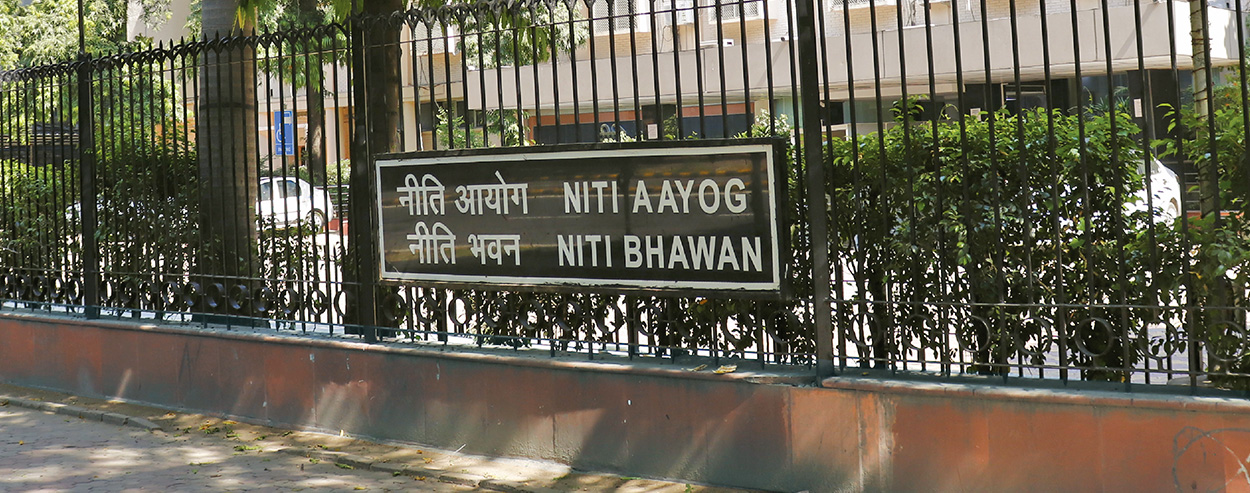
NITI Aayog organized a workshop titled “Coal Gasification Technology for Indian High Ash
Content Coal” at NITI Bhawan, New Delhi, on 2
nd
September 2025. The workshop was
chaired by Dr V K Saraswat, Member, NITI Aayog. This pivotal event brought together all the
relevant stakeholders, including senior officials from the Ministry of Coal, IIT Delhi,
Professor Fraunhofer IKTS, Germany and active participation from government
organizations and industry partners such as BHEL, IIT Roorkee, GAIL, CIMFR, IOCL, CIL, TFL,
NLCIL, EIL, L&T Group, JSPL, DVC, CCL, PDIL, CSIR-IMMT and Dastur Energy. The workshop
served a critical platform to address the technological, financial, and policy challenges
associated with achieving India’s ambitious goal of 100 million tonnes per annum (MTPA) of
coal gasification by 2030. It is also aligned with the “Make in India” and “Atmanirbhar
Bharat” initiatives, promoting domestic manufacturing and reducing import dependency.
Coal gasification is a thermochemical process that converts coal into syngas (a mixture of
CO, H₂, CO₂, CH₄ and others), which can have various applications such as electricity
generation, chemical production (methanol, ammonia, urea), and liquid fuels. With rising
global energy demand and the need for cleaner utilisation of coal resources, coal
gasification has emerged as a strategic technology in several countries, including China, the
US, South Africa, and India. India possesses the fourth-largest coal reserves globally, with
an estimated 389 billion tonnes, of which 212 billion tonnes are classified as proven
reserves. Coal gasification allows for the cleaner utilization of these vast resources to
achieve energy security and self-reliance, reduce dependency on imports of natural gas,
methanol, ammonium nitrate, and other products.
India now stands at an inflection point. With national ambitions for coal gasification
expansion, it is essential to ensure that the technologies selected are not only proven
globally but also work for the specific coal types available in India at a commercial scale.
Therefore, NITI Aayog convened a workshop to get feedback from the national experts who
have experimented with Indian coal for gasification, as well as international experts, e.g.,
2 Coal Gasification Technology for Indian High Ash Content Coal
Fraunhofer Institute and others, who have actively engaged in developing and refining coal
gasification technologies to address the diverse characteristics of coal resources
worldwide.
The workshop extensively explored the landscape of coal gasification technologies, both
globally and indigenously, which are fit for Indian coal. It also majorly dispelled the long-
standing myth that Indian coal is unsuitable for gasification, attributing past failures to a
"technology mismatch" rather than inherent feedstock limitations.
The open forum discussion was marked by a shared sense of urgency and purpose. Key
themes included the awareness about the specific initiatives taken by the Ministry of Coal
to promote Coal Gasification, initial financial support through Viability Gap Funding (VGF)
to de-risk pioneering projects, and the strategic integration of Carbon Capture, Utilization,
and Storage (CCUS) to create a zero-emission pathway. A consensus emerged on the
necessity of moving beyond import dependency and fostering a collaborative ecosystem
where industry, academia, and government work in synergy to scale up "Made in India"
technologies.
The workshop concluded with a powerful call to action from Dr. V.K. Saraswat, urging the
industry to embrace its role as a technology developer and implement indigenous solutions
with speed and confidence. The outcomes of this workshop will serve as a crucial guide for
policymakers and industry leaders in shaping a sustainable and self-reliant future for India's
energy sector. The list of Participants in the workshop is attached at Annexure-1.
3 Coal Gasification Technology for Indian High Ash Content Coal
Background
India stands at a critical juncture in its energy transition. While committed to achieving its
net-zero carbon emissions target by 2070, the nation’s vast coal reserves remain a
cornerstone of its energy security and industrial growth. The challenge lies in harnessing this
resource in a clean, efficient, and sustainable manner. The global call for decisive action
against climate change, amplified during COP26, has shifted the spotlight onto advancing
clean coal technologies.
Coal gasification emerges as a potent instrument in this endeavor. It provides a pathway to
convert high-ash Indian coal into valuable products like methanol, ammonia, hydrogen, and
synthetic natural gas (SNG), thereby reducing reliance on imported fuels and feedstocks
and conserving valuable foreign exchange. Recognizing this potential, the Government of
India launched the National Coal Gasification Mission, with an ambitious target of
achieving 100 MTPA gasification capacity by 2030, supported by a dedicated Viability Gap
Funding (VGF) scheme.
However, the path to commercial-scale deployment is facing some challenges. The unique
characteristics of Indian coal, such as high ash content (30-45%), variability in gross
calorific value, and complex mineral matter, have historically posed significant technical
hurdles. This workshop was convened to address these challenges by bringing together the
brightest minds from policy, industry, and research to forge a clear and actionable roadmap
for the successful implementation of coal gasification technology in India.
4 Coal Gasification Technology for Indian High Ash Content Coal
Inaugural Session
The inaugural session set the stage for a day of insightful and productive discussions, with
key speakers framing the strategic context and core challenges of coal gasification in India.
Shri Rajnath Ram, Adviser (Energy), NITI Aayog, delivered the welcome address, providing
an overview of the national efforts to promote coal gasification. He highlighted the proactive
steps taken by the government, including the launch of the National Mission and the VGF
scheme, designed to catalyze industry participation.
Dr. Anshu Bharadwaj, Program Director, NITI Aayog, emphasized the strategic
imperatives driving the gasification agenda. He explained that gasification is not merely an
energy technology but a critical enabler for India’s industrial ecosystem, providing a
domestic route to producing essential chemicals and fertilizers. Dr. Bharadwaj expressed
hope that the workshop would facilitate a constructive exchange of ideas to address key
bottlenecks, especially those arising from the mineral complexity and ash characteristics of
Indian coal.
Dr. V.K. Saraswat, Member, NITI Aayog, delivered the keynote address, drawing attention
to the national significance of coal gasification and the persistent perception that Indian
5 Coal Gasification Technology for Indian High Ash Content Coal
coal is unsuitable for gasification. He cited the example of China, which despite having
relatively high-ash coal, has successfully developed a robust gasification industry
producing chemicals, fertilizers, and other industrial products. Dr. Saraswat discussed pre-
processing strategies and feedstock conditioning techniques that improve gasifier
performance, and referenced domestic efforts by Larsen & Toubro, IIT Delhi, and other
institutions in setting up gasification systems.
He noted that challenges often stem from equipment mismatch, ash chemistry, and
operational integration. The successful demonstration by Thermax in converting high-ash
coal directly into methanol without pre-treatment was highlighted as a model for replication.
Trials conducted by CSIR-CIMFR and BHEL were also acknowledged. Dr. Saraswat
underscored the need for clarity in technology selection and posed the central question of
the workshop: “Which gasification technology is best suited for Indian coal?”
He concluded by expressing confidence that the deliberations would contribute
meaningfully to achieving the Prime Minister’s vision of 100 million tonnes of coal
gasification capacity by 2030
Shri Vikram Dev Dutt, Secretary, Ministry of Coal, outlined the Ministry's multi-pronged
strategy to support the gasification mission. He acknowledged the five key challenges faced
by the industry and the steps/initiatives taken by the Ministry of Coal to overcome various
challenges as mentioned below:
1. Technology Adoption: Adapting and re-engineering foreign and Indian designs
suitable for Indian coal conditions.
2. High CAPEX: To support the gasification projects which involve high CAPEX, the
Cabinet has approved an outlay of ₹ 8,500 crore as a financial incentive for the
promotion of coal/lignite gasification projects for both government PSUs as well as
the private sector. Also, a 50% rebate in the revenue share for coal used in
gasification has been introduced in commercial coal block auctions, provided that at
least 10% of the total coal production is used for gasification purposes.
6 Coal Gasification Technology for Indian High Ash Content Coal
3. Technology Transfer Barriers: A framework has been established for granting
waivers from registration for Transfer of Technology (ToT) from land-border-sharing
countries on a case-by-case basis. Waiver to one application has been granted.
4. Assured Coal Supply: A new sub-sector, "Production of Syngas leading to coal
gasification," was created under the NRS linkage auctions policy to support this
initiative.
5. High cost of coal as raw material: The Government has allowed coal supply to
gasification projects under the NRS auction with a floor price at the notified price of
the regulated sector, for the projects commissioning within the next seven years.
7 Coal Gasification Technology for Indian High Ash Content Coal
Presentation 1: Global Experiences in various Coal Gasification
Technologies – by Fraunhofer Institute for Ceramic Technologies and
Systems IKTS
The first technical session commenced with a presentation by Prof. Martin Grabner from
Fraunhofer, who provided a comprehensive global overview of coal gasification
technologies. Drawing from his extensive experience at Fraunhofer IKTS and collaborations
with major industry players, Prof. Grabner set an analytical tone for the workshop by
contextualizing the challenges specific to Indian high-ash coal within the global landscape.
Highlights of the presentations:
Prof. Grabner began by tracing the evolution of gasification technologies through three
distinct generations. He noted that the current global market is dominated by entrained-
flow gasifiers, primarily due to their proven scalability and relatively lower capital
expenditure for coals with favourable characteristics. He highlighted that Chinese
manufacturers have become leaders in this space, leveraging entrained-flow designs for a
wide range of chemical and energy applications.
However, he critically analyzed the suitability of these dominant technologies for the unique
properties of Indian coal. He identified several key challenges:
8 Coal Gasification Technology for Indian High Ash Content Coal
1. High and Variable Ash Content (30-45%): Unlike many Northern Hemisphere coals,
Indian coal’s ash content is not only high but also highly variable, which complicates
stable plant operation.
2. Complex Ash Chemistry: The presence of high concentrations of silica and alumina,
coupled with low levels of iron and lime, results in a high ash fusion temperature (AFT)
and a very low basicity. This makes slagging operations in entrained-flow gasifiers
particularly challenging, often requiring significant quantities of fluxing agents (like
limestone) to lower the melting point. This not only adds to the operational cost but also
increases the overall solid throughput and potential for refractory wear.
3. Syngenetic Nature of Ash: Prof. Grabner explained that the intergrowth of mineral
matter with the carbon matrix in Indian coal makes physical cleaning (washing) less
effective, meaning that a significant portion of the ash remains even after pre-
treatment.
Based on this analysis, Prof. Grabner offered a comparative recommendation for India:
1. Entrained-Flow Gasifiers: Deemed the ‘least suitable’ for widespread application with
raw, high-ash Indian coal due to the aforementioned issues.
2. Fixed-Bed (Moving Bed) Gasifiers: While highly energy-efficient, their inability to
handle the high percentage of fines generated during the mining and crushing of Indian
coal remains a major operational bottleneck.
3. Fluidized-Bed Gasifiers: Presented as the most promising and robust option. Their key
advantages include tolerance for a wide range of particle sizes (including
fines/particles), the ability to operate at lower, non-slagging temperatures, and inherent
flexibility in managing fluctuating feedstock quality.
Q&A and Discussion:
The presentation was followed by an insightful Q&A session that delved deeper into the
technical discussions.
9 Coal Gasification Technology for Indian High Ash Content Coal
i. A representative from Greta Energy raised a pertinent question regarding feedstock
compatibility, asking whether entrained-flow gasifiers could be adapted to handle
high-ash coal. Prof. Grabner responded that while it is technically possible through
design modifications and blending with lower-ash feedstock or petcoke, such
adaptations come with significant operational compromises and economic
penalties, reinforcing his view that it is not the most optimal path for India's
indigenous coal.
ii. Dr. V.K. Saraswat intervened to emphasize a crucial strategic point: that India’s goal
should be to develop or adopt technologies that are largely "agnostic" to coal
composition. This would enable the utilization of coal from various mines across the
country without requiring bespoke solutions for each source, thereby ensuring the
scalability and economic viability of the national gasification mission.
iii. A query from New Era Cleantech about the potential for automation led to a
discussion on process control. Prof. Grabner noted that Fluidized Bed systems, due
to their stable and well-mixed nature, are inherently better suited for automation.
However, he cautioned that the high and variable ash levels in Indian coal can still
introduce complexities that would challenge fully autonomous operation, suggesting
that a combination of advanced process control and skilled human oversight would
be necessary.
The session of Prof. Grabner concluded with a clear consensus that a deep, scientific
understanding of India’s unique feedstock characteristics must be the starting point for any
technology selection, and that a one-size-fits-all global approach is unlikely to succeed.
10 Coal Gasification Technology for Indian High Ash Content Coal
Presentation 2: The development of a Fluidized Bed Gasification for
Methanol production with Indian Coal – by IIT Delhi
This session provided a powerful testament to India's indigenous innovation capabilities,
with Prof. R.R. Sonde, IIT Delhi, presenting the two-decade journey and landmark success
of the indigenous fluidized bed gasification technology.
Key Points of the Presentation:
Prof. Sonde began his presentation by celebrating the “Wow Moment” - the first successful
production of high-purity methanol from high-ash (>45%) Indian coal at the Coal-to-
Methanol (CTM) pilot plant in February 2022. He framed this as a pivotal achievement for the
nation, born from a multi-agency collaboration of 20 domestic partners, led by IIT Delhi and
Thermax.
He systematically deconstructed the historical "myth" surrounding the failures of the
Talcher and Ramagundem projects, attributing them squarely to the force-fitting of
inappropriate imported technologies. Based on a rigorous fundamental analysis of coal
characteristics, including reactivity, particle size, and ash properties. He presented an
11 Coal Gasification Technology for Indian High Ash Content Coal
“unambiguous” conclusion: that the circulating fluidized bed design is the most
effective and appropriate technology for managing India’s high-ash, fines-laden coal.
Key highlights of the CTM plant’s success included:
1. High Performance: The plant has achieved a Carbon Conversion Efficiency (CCE) of
92% and a Cold Gas Efficiency (CGE) of 70%, demonstrating its high performance
even with challenging feedstock. The team is now working to push the technology to
a "Mark IV" level.
2. Financial Viability: Prof. Sonde presented a detailed financial analysis, revealing
that SNG produced from pithead coal could be up to 20 times cheaper than imported
natural gas. He acknowledged the higher initial CAPEX of the R&D-scale plant but
projected that with economies of scale and a strengthened indigenous supply chain
involving MSMEs, the cost would become highly competitive.
3. Call for Policy Support: He made a strong case for initial government support,
specifically advocating for a 70% Viability Gap Funding (VGF) grant to de-risk the
first few commercial-scale projects (100-300 TPD). This, he argued, would be a
critical step to bridge the gap from pilot to full commercial deployment.
Q&A and Discussion:
The presentation sparked a highly engaged Q&A session, focusing on the practical aspects
of the CTM technology and its commercial roadmap.
i. Participants inquired about the plant's ability to handle impurities. Prof. Sonde
explained that the technology incorporates a sophisticated, non-aqueous gas
cleanup system, which not only removes contaminants like tar and mercury but also
offers significant ecological benefits by minimizing water usage and effluent
discharge.
ii. The scalability of the technology was a key point of interest. Prof. Sonde detailed a
phased scale-up plan, moving from the current pilot plant to a 100-300 TPD
12 Coal Gasification Technology for Indian High Ash Content Coal
demonstrator, before eventually reaching large commercial scales. He assured the
audience that the underlying principles of the fluidized bed design allow for confident
and manageable scaling.
iii. In response to a question about the project's documentation, Prof. Sonde
announced that a detailed white paper documenting the entire journey—from
design and challenges to operational learnings and future projections—would be
submitted to all stakeholders for review and knowledge sharing. This was widely
appreciated as a transparent and valuable contribution to the national effort.
The Presentation session concluded with a strong sense of optimism, with Prof. Sonde’s
presentation providing tangible proof of India's capability to develop world-class, context-
specific solutions for its energy challenges.
13 Coal Gasification Technology for Indian High Ash Content Coal
Presentation 3: Industry Leadership and Indigenous Capabilities - by BHEL
This presentation focused on the key public sector institutions that are at the forefront of
implementing and supporting India’s gasification mission. The team from Bharat Heavy
Electricals Limited (BHEL) shared insights from their ongoing coal gasification initiatives,
notably the construction of a 2000 TPD ammonia plant in a joint venture with Coal India
Ltd. The plant design incorporates a pressurised fluidized bed gasifier, selected to
address the variability in coal chemistry and the presence of impurities such as silica and
alumina. Additional units have been integrated to remove coal-borne contaminants and to
enable carbon circularity within the facility.
BHEL’s Four-Decade Journey in Gasification
The presentation by BHEL showcased their extensive and pioneering journey in the field of
coal gasification. The representative traced BHEL’s four-decade legacy, from its initial work
14 Coal Gasification Technology for Indian High Ash Content Coal
with Moving Bed gasifiers in the 1980s to its current leadership in Pressurized Fluidized Bed
Gasification (PFBG).
Key highlights included:
1. Indigenous PFBG Technology: BHEL has successfully developed and demonstrated
its own PFBG technology, which is specifically tailored to handle the high ash and
variability of Indian coal. A key advantage highlighted was its ability to accept fines
and operate in a non-slagging mode, thereby avoiding the tar formation issues
associated with other technologies.
2. Commercial Readiness: The presentation detailed BHEL's readiness for large-scale
commercial deployment. The design for a 2400 TPD gasifier has undergone rigorous
vetting by national and international experts, including IIT Madras and Prof. Bo
Leckner, and is now being implemented for the Coal-to-Ammonium Nitrate (CtAN)
joint venture project with Coal India Limited (CIL).
3. Manufacturing Prowess: BHEL emphasized its end-to-end “Make in India”
manufacturing ecosystem, with 16 facilities across the country capable of producing
all critical components of the gasification island. This positions BHEL as a crucial
partner in building a self-reliant supply chain.
Q&A and Discussion:
During the Q&A, BHEL confirmed that the financial closure for their JV project is targeted for
September 2025 and reiterated their confidence in scaling the technology further,
expressing a target of achieving a 14.3x scale-up factor from their initial designs.
In response, Dr. V.K. Saraswat, Member, NITI Aayog, proposed the establishment of a
mechanism for periodic data sharing across institutions and developers to facilitate
knowledge exchange and accelerate technology adaptation.
15 Coal Gasification Technology for Indian High Ash Content Coal
Presentation 4: Industry Leadership and Indigenous Capabilities - by CSIR
- CIMFR
CSIR-CIMFR’s R&D and Feedstock Expertise
The presentation by the CSIR-Central Institute of Mining and Fuel Research
(CIMFR) underscored its vital role as the scientific backbone of India’s gasification mission.
The representative highlighted their comprehensive study with CMPDIL, titled “Gasification
Potential Mapping of Indian Coal,” submitted to NITI Aayog which serves as a foundational
resource for the industry.
Key contributions and capabilities presented were:
i. Advanced R&D Facilities: CIMFR operates a 1.5 TPD PFBG pilot plant and state-of-
the-art analytical hubs, which have been instrumental in developing operational
16 Coal Gasification Technology for Indian High Ash Content Coal
philosophies for gasifying not just high-ash coal, but also lignite and biomass. Their
trials have demonstrated a cold gas efficiency of up to 65%.
ii. Industry Support and Knowledge Sharing: CIMFR offers its expertise to industry
partners in crucial areas such as feedstock pre-processing, techno-economic
feasibility analysis, and the development of indigenous catalysts and gas cleanup
technologies.
iii. Future Focus: The presentation identified the need for further research in AI-based
automation for process optimization and expanded CFD modelling to cover the
entire gasification value chain.
Q&A and Discussion:
The panelists noted that adaptations would be necessary for any organization seeking to
deploy gasification units at some scale, because these challenges have been addressed
within CIMFR’s own facility. As there’s some ongoing work that includes improvements in
process modelling, logistics planning, and circularity integration.
In response to a query regarding simulation tools, the CIMFR team emphasised the need for
integrated simulation packages that account for key process parameters such as
feedstock variability, impurity profiles, and gasifier dynamics. CIMFR was ready to offer its
resources and services to the industry for the successful realization of Coal gasification on
a commercial scale using Indian High Ash Coal.
17 Coal Gasification Technology for Indian High Ash Content Coal
Open Forum for Discussion
The Open Forum was a highly interactive session that brought together the diverse
perspectives of all stakeholders, leading to a set of clear and actionable recommendations.
1. Shri Atanu Mukherjee, CEO of Dastur Energy, provided a nuanced industry
perspective, stating that for Indian coal, non-slagging gasifiers are generally the most
suitable option. He acknowledged the operational flexibility of fluidized bed gasifiers
but pointed out that achieving large scale may require multiple units, which could dilute
economies of scale. He suggested that for broader deployment, non-slagging designs
remain preferable.
2. The representative from BHEL raised a critical procedural issue: the need
for regulatory alignment and expedited clearance under the Indian Boiler
Regulations (IBR). Streamlining this process was identified as a key factor in improving
project timelines and reducing bottlenecks.
3. Shri Naveen Ahlawat, Head of Gasification Projects at JSPL, shared valuable
operational insights from their Angul facility. He highlighted the successful role of
the MSME sector in domestic component sourcing, reinforcing the potential for a
robust indigenous supply chain. He strongly advocated for the integration of CCUS to
ensure environmental sustainability and stressed the need for guaranteed offtake
mechanisms for gasification-derived products to attract and secure private
investment.
4. A strong consensus emerged that the coal characterization expertise available at
institutions like CSIR-CIMFR and IIT Delhi should be formally leveraged by the industry
for feedstock mapping and technology selection.
18 Coal Gasification Technology for Indian High Ash Content Coal
Concluding Remarks and Actionable Roadmap
The workshop concluded with powerful closing remarks that synthesized the day’s
deliberations into a clear vision for the future.
Shri Vikram Dev Dutt, Secretary, Ministry of Coal, thanked all participants and reaffirmed
the government’s full support for the coal gasification mission, backed by the VGF scheme.
He emphasized the need for a collaborative ecosystem and urged stakeholders to move with
speed, assuring them of the Ministry’s help in overcoming any hurdles.
19 Coal Gasification Technology for Indian High Ash Content Coal
Dr. V.K. Saraswat, in his concluding address, delivered a passionate call to action. He
expressed his frustration with the industry’s historical reliance on imported technology and
what he termed “biased foreign data”. He declared that India has reached an inflection point
and urged the Indian industry to shed its inhibitions and evolve from being assemblers of
foreign designs to becoming confident technology developers.
He asserted that with the proven successes of BHEL, CIMFR, and the IITD-Thermax
collaboration, the expertise to handle Indian coal now resides firmly within the country. He
proposed that project funding mechanisms should be linked to domestic procurement
of components to strengthen local manufacturing. He concluded by stating that the time
for deliberation is over, and the time for swift, decisive implementation is now, driven by a
collective belief in India's indigenous technological capabilities.
20 Coal Gasification Technology for Indian High Ash Content Coal
Way Forward
Participants emphasised the need for scaling pilot projects to commercial levels, integrating
CCUS, and ensuring industry involvement in core technology development. With policy
support through Viability Gap Funding, assured coal supply, and dedicated auction
mechanisms, India is well-positioned to advance its coal gasification roadmap from an
energy security perspective and take up large-scale coal gasification projects.
Most of the experts recommended circulating fluidized bed gasification technology for
Indian High Ash Content Coal, specifically due to the fact that the chemistry of Indian coal
ash does not support other gasification technologies viz, entrained bed and fixed bed.
21 Coal Gasification Technology for Indian High Ash Content Coal
Annexure-I
List of participants attended the workshop held on 2
nd
September 2025 at NITI Aayog
S.No Name Designation Organization
1. Dr. V.K. Saraswat Member NITI Aayog
2. Shri Vikram Dev Dutt Secretary Ministry of Coal
3. Ms. Rupindar Brar Additional Secretary Ministry of Coal
4. Shri Sanoj Kumar Jha Additional Secretary Ministry of Coal
5.
Sh. Birendra Kumar
Thakur
Director – Technical Ministry of Coal
6. Shri Alok Kumar Singh OSD Ministry of Coal
7. Deputy Secretary D/o Fertilisers
8. Dr. Anshu Bharadwaj PD, GTE&CC
9. Shri Rajnath Ram Adviser (Energy) NITI Aayog
10. Ravi Kumar Consultant, Grade-1 NITI Aayog
11. Ms. Anupama Kumari Consultant (Deputation) NITI Aayog
12. Vishal Kumar Young Professional NITI Aayog
13. Chandrabhal Chakraborty Young Professional NITI Aayog
14. Sh. Peeyush Kumar MD, BCGCL Coal India Ltd
15. Sh. Asheesh Kumar Director BD Coal India Ltd
16. Shri Suman Kumar GM (Washery) CCL
17.
Dr. Suresh Chandra
Suman
Director (Mines) & Director
(P&P)
NLCIL
18. Shri Rajkumar Deputy General Manager NLCIL
19. Shri Vikrant Malick Executive Engineer NLCIL
20. Prof. R.R. Sonde
Professor, Chemical
Engineering
IIT Delhi
21. Sh. Manjesh Kumar — IIT Delhi
22. Dr-Ing. Martin Grabner Professor
TU Freiberg /
Fraunhofer IKTS
23.
Sh. Koppu Sadashiv
Murthy
CMD BHEL
24. Sh. S. M. Ramanathan Director (E, R&D) BHEL
25. Sh. V. Shyamala GM & Head (CTM) BHEL
26. Sh. S. S. Verma GM BHEL
27. Sh. Vivek Kumar Gupta DGM BHEL
22 Coal Gasification Technology for Indian High Ash Content Coal
28. Sh. Sandeep Goyal Sr Manager BHEL
29. Sh. Shivam Agarwal Manager BHEL
30. Sh. Deepak Gupta Director (Projects) GAIL
31. Sh. Sanjeev Kumar Gupta General Manager GAIL
32. Sh. Harindra Kumar General Manager GAIL
33. Shri Suresh Tiwari Dy. General Manager GAIL
34. Shri Suman Kumar Director (P&BD) IOCL
35. Shri SK Papneja ED (PS-PJ) IOCL
36. Sh. Ranjan Nair
Business Head – Renewable
Energy
BPCL
37. G Vikram Member, Coal Gas Task Force BPCL
38. Prof. Arvind Kumar Mishra Director CSIR-CIMFR
39. Dr. Prakash D Chavan Chief Scientist CSIR-CIMFR
40. Dr S Dutta — CSIR-CIMFR
41. Dr. Alok Tripathy — CSIR-IMMT
42. Dr. SP Das Scientist, Mineral Processing CSIR-IMMT
43. Mrityunjay Prasad GM DVC
44. Sh. A K Balyan Secretary General CGAI
45. Sh. Naveen Ahlawat Head – Gasification Projects JSPL
46. Mr. Venkatesh M
CTO & Head – Design
Competency Center
L&T Group
47. P. Balaramakrishna GM L&T Group
48. Mr. Pankaj Garg DGM, Corporate Affairs L&T Group
49. Sh. Shirish Dalal VP & Head, AdVENT L&T Group
50. Varun Jindal Managing Director Dev Energy
51. Dr. Dev Kumar Gupta
Head – Innovation Projects &
Energy Solutions
Thermax
52. Kiran Chauhan Program Manager Thermax
53. Sh. Kamal Kishore Pant Director IIT Roorkee
54. Ms. Komal Tripathi Assistant Professor IIT Roorkee
55. Ritu Mathur
Director, Energy & Climate
Studies
TERI
56. Sh. Atanu Mukherjee Founder & CEO Dastur Energy
57. Dr. Suprotim Ganguly Techno-strategic Advisor Dastur Energy
58. Mr. Ashis Mahapatro CEO – Steel Greta Energy Ltd
59. Sh. Vaibhav Kakulte Vice President Greta Energy Ltd
23 Coal Gasification Technology for Indian High Ash Content Coal
60. Sh. Nitesh Chaudhary — Greta Energy Ltd
61. Anup Goyal Director Greta Energy Ltd
62. Sh. Balasaheb Darade Founder & MD New Era Cleantech
63. Rakesh Kumar CBO New Era Cleantech
64. Reshma Mohan Credit Analyst SBI Caps
65. Subham Goel VP SBI Caps
66. Rajeev Ranjan Singh Manager SBI Caps
67. Himanshu Singh Manager Chakr Innovation
68. Shravan K. Pushkar Consultant NITI Aayog
69. Prince Tiwari YP NITI Aayog
70. Fayaz Tantray Consultant NITI Aayog
71. Sounak Mukherjee Consultant NITI Aayog
72. Sapna Bisht Consultant NITI Aayog
73. Sristi Dewan YP NITI Aayog
74. Gayatri Pande YP NITI Aayog
75. Devanshu Vishwakarma YP NITI Aayog
Report Compilation & Workshop Management Team
1. Ravi Kumar – Consultant, NITI Aayog
2. Vishal Kumar - Young Professional, NITI Aayog
3. Chandrabhal Chakraborty - Young Professional, NITI Aayog
4. Anupama Kumari – Consultant (Deputed from Vasudha Foundation)